
In This Article
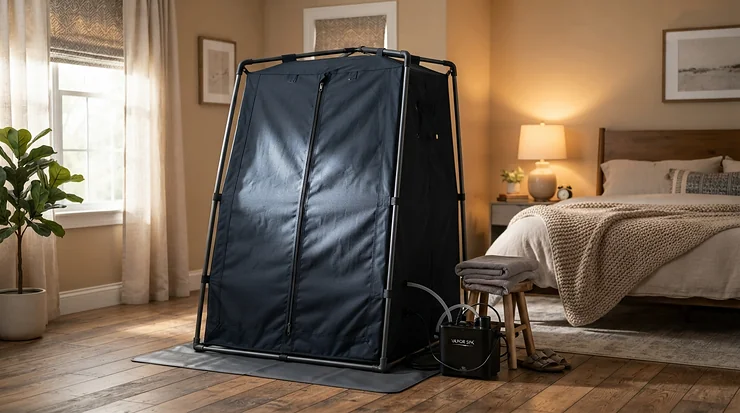
A personal steam sauna for home is a compact, single-person steam enclosure, usually a foldable box or tent, fed by a plug-in steam generator. It fills a small cabin with warm, humid air in minutes, then collapses flat afterwards. There’s no plumbing, no building work and no spare room required.
That’s the whole appeal. Britain is a nation of small bathrooms, damp Novembers and gym memberships we feel guilty about. A foldable steam cabin that lives behind the wardrobe and comes out on a Sunday night starts to look rather sensible.
Steam is also a different beast from a Finnish-style dry sauna. Healthline’s sauna guide notes that steam rooms run at roughly 110°F (43°C) with humidity close to 100 per cent, while traditional saunas run far hotter and drier. A personal steam sauna for home is closer to the first kind: gentler on the air, heavier on the skin.
In this guide you’ll find seven real models, a plain-English breakdown of steam generator capacity, a proper look at humidity level control, and an honest verdict on box vs tent-style steam units. Prices are indicative ranges only, so check current price on amazon.co.uk before you buy.
Quick Comparison: Personal Steam Sauna for Home at a Glance
Here’s the shortlist before we dig into detail. Specs come from manufacturer-style listings and review roundups, and prices are broad ranges that move constantly.
| Model | Format | Steamer (listed) | Price range (indicative) | Best For |
|---|---|---|---|---|
| Durasage Lightweight Portable Personal Steam Sauna | Tent, foldable frame | 800W, 60-min timer | £70-£120 | Durasage: first-timers on a budget |
| FniOk Portable Steam Sauna | Tent, foldable | 1000W, 9 heat levels | £80-£130 | FniOk: all-round daily use |
| OppsDecor Portable Steam Sauna | Compact tent | 800W, 2L pot | £60-£110 | OppsDecor: small spaces |
| SereneLife SLISAU35BK | Full-size cabin | Remote, timer | £90-£150 | SereneLife: taller users wanting a chair and remote |
| X-Vcak Upgraded Portable Sauna | Box-style cabin | 9 levels, remote | £80-£140 | X-Vcak: control-focused buyers |
| Costway 800W 2 Person Steam Sauna Tent | Two-person tent | 800W, 3L | £70-£130 | Costway: couples or shared homes |
| Patiosunny 3L/1200W XL Sauna Box | Steam sauna box, XL | 1200W, 3L | £90-£150 | Patiosunny: big-framed users wanting power |
Looking at the table, the Durasage and OppsDecor units are the low-risk entry points, while the Patiosunny and FniOk add steam output for those who find a weak plume disappointing. The Costway is the only genuine two-seater here, which matters if you live with someone who’ll inevitably want a go. Verify UK-specific voltage and plug details on every listing, as we’ll cover shortly.
💬 Just one click — help others make better buying decisions too!😊
Top 7 Personal Steam Sauna for Home Picks: Expert Analysis
Note that I haven’t personally used any of these products. Everything below is analysis of published specs and the aggregated review themes available at the time of research, framed as reasoning rather than anecdote.
1. Durasage Lightweight Portable Personal Steam Sauna — easiest to live with
Weight is the headline here. Review roundups list it at about 16 lb (roughly 7.3 kg), light enough to carry upstairs without a grumble.
The 800W steam generator is the entry-level class, but it comes with a 60-minute timer, a foldable frame, zippered access and a chair. On paper that means steady, moderate steam rather than a roaring cloud. For a cabin this size, that’s usually adequate.
Based on the spec sheet, this suits first-timers who want to test whether they’ll actually use a steam cabin before spending more. Several roundups label it a budget favourite, and one scores it around 4.4 out of 5. Reviewers highlight the light frame and quick assembly. I couldn’t verify individual amazon.co.uk review text, so treat those themes as indicative.
Pros:
- ✅ Light frame is easy to carry and store
- ✅ Includes timer and chair as standard
- ✅ Simple assembly suits first-time buyers
Cons:
- ❌ 800W steam output can feel gentle on cold days
- ❌ Zippered front pocket is basic
Expect roughly £70-£120. Verdict: a sensible low-risk way into steam bathing.
2. FniOk Portable Steam Sauna — 1000W output with nine heat levels
Nine heat levels is the standout. Nine steps give you finer control than the typical “low, medium, high” approach.
The listing quotes a 1000W steamer, remote control, foldable design and a maximum around 140°F (60°C). That maximum is worth noting. As we discuss later, commercial guidance for steam rooms sits much cooler, so you’ll probably live on the middle settings. Setup is described as taking under ten minutes.
What most buyers overlook is that extra wattage matters most in cool rooms. A 1000W steamer builds humidity faster in an unheated spare room than an 800W unit does. Roundups put it around 4.4 out of 5, citing the heat range and ease of setup.
Pros:
- ✅ Nine heat levels allow fine tuning
- ✅ 1000W generator builds steam quickly
- ✅ Remote control and quick setup
Cons:
- ❌ Top setting runs hotter than most people need
- ❌ Fabric needs airing after each use
Expect around £80-£130. Verdict: the best all-rounder if you’ll use it weekly.
3. OppsDecor Portable Steam Sauna — a long-running budget favourite
It’s one of the longest-established names in this category. Coverage on a Yahoo shopping feature mentioned nearly 1,400 Amazon shoppers rating it at that point, which gives a sizeable review base.
The listing describes an 800W generator, a 2L steam pot and six timer settings. Dimensions listed run around 89 x 102 x 75 cm with a weight of about 6.3 kg. A 2L tank is a real limit: the smaller the reservoir, the sooner you’ll need a top-up on long sessions.
I’d point this at people short on space who plan 20-30 minute sessions rather than marathon ones. Review roundups include it among best-value picks, with themes around price and simplicity. Fabric and zip longevity are the usual long-term question for models in this class.
Pros:
- ✅ Compact and easy to stow
- ✅ Large review base to read through
- ✅ Six timer settings for flexible sessions
Cons:
- ❌ 2L tank limits long sessions
- ❌ Modest steam output in cold rooms
Expect roughly £60-£110. Verdict: strong value when space is tight.
4. SereneLife SLISAU35BK — full-size comfort with remote and chair
“Full size” is how it’s marketed. If you’re tall, that matters more than any other spec on this list.
Listings describe a remote control, a foldable chair and a timer. I couldn’t confirm steamer wattage or tank size from the sources available, so check those on the listing before buying. Without them, you can’t properly judge steam performance.
Based on what’s published, the spec sheet suggests it’s aimed at comfort-first buyers who want a conventional cabin feel rather than the minimum viable tent. Roundups feature it but with limited detail, and I couldn’t verify a robust pool of reviews. Be cautious here and read recent buyer feedback on amazon.co.uk.
Pros:
- ✅ Full-size design suits taller users
- ✅ Remote control and timer included
- ✅ Foldable chair keeps storage simple
Cons:
- ❌ Steamer specs need checking on the listing
- ❌ Less independent review detail available
Expect around £90-£150. Verdict: promising, but do your homework first.
5. X-Vcak Upgraded Portable Sauna — nine levels in a box-style cabin
The “upgraded” label refers to its steamer, remote, folding chair and nine adjustment levels. It leans toward the steam sauna box format rather than a floppy tent.
A more rigid structure holds heat and humidity better around your shoulders and neck. That’s the primary appeal of any steam sauna box. Nine levels again give you room to dial in comfort rather than lurching between extremes.
For buyers who like to fiddle with settings, this is a natural fit. It features in several best-of roundups, though I couldn’t verify detailed wattage or tank capacity. Treat the nine-level control as the selling point and confirm the rest on the listing.
Pros:
- ✅ Box-style structure retains steam well
- ✅ Nine adjustment levels
- ✅ Remote and chair included
Cons:
- ❌ Steamer specs not fully confirmed
- ❌ Bulkier to store than basic tents
Expect roughly £80-£140. Verdict: good for tinkerers, subject to spec checks.
6. Costway 800W 2 Person Steam Sauna Tent — the only genuine two-seater
Two people can share it, thanks to side holes and a wider footprint. That’s rare at this price.
Listings quote an 800W steamer with a 3L stainless steel pot, a tempered glass lid, anti-dry protection and auto power-off. The timer runs 15-90 minutes across nine levels, and the nine temperature levels top out around 129°F (54°C). It weighs about 12.5 lb (5.7 kg), and the remote range is around 32.8 ft.
The 3L tank is the best spec here for longer sessions. But 800W across two bodies means a slower, gentler warm-up, so budget for a longer pre-heat. Listings show high scores from small review samples, which tells you very little. Be wary of ratings based on a handful of reviews.
Pros:
- ✅ Genuine two-person capacity
- ✅ 3L steel pot with safety shut-off
- ✅ Flexible 15-90 minute timer
Cons:
- ❌ 800W is stretched across two users
- ❌ Limited review volume to lean on
Expect about £70-£130. Verdict: the shared-household pick.
7. Patiosunny 3L/1200W XL Sauna Box — most steam, most headroom
Power is the point. At 1200W with a 3L tank, it’s the most capable steamer on this list.
The listing describes an XL foldable cabin, around 70.8 inches (about 180 cm) tall, with remote control, a 99-minute timer and 15 power levels. The listed maximum temperature is a modest 107°F (about 42°C). That’s actually closer to commercial steam-room guidance than some rivals.
For taller users, the extra headroom matters, since a cramped cabin makes steam feel like a hot jumper on your head. The 1200W unit should build humidity quicker in cooler rooms. As with several others, detailed independent reviews were thin, so check recent feedback on amazon.co.uk.
Pros:
- ✅ 1200W steamer with 3L tank
- ✅ Tall XL cabin suits bigger users
- ✅ Fifteen power levels for fine control
Cons:
- ❌ Limited independent review detail
- ❌ Larger folded footprint than tents
Expect around £90-£150. Verdict: best for power and height.
How to Choose a Personal Steam Sauna for Home
Choosing well comes down to seven checks. Work through them in order.
- Confirm UK compatibility first. Many listings quote 110V. You need a 230V unit with a proper UK plug, so read the listing carefully.
- Check steam generator capacity. Wattage governs how fast steam builds, while tank size governs how long it lasts.
- Look for humidity level control. Multiple steam levels and a timer matter more than a flashy remote.
- Pick box or tent. A steam sauna box feels sturdier, while tents fold smaller.
- Measure your height and your space. A cabin of 180 cm or taller suits most adults.
- Check safety features. Anti-dry protection, auto shut-off and a tempered glass lid are all worth having.
- Read recent reviews. Look for patterns about zips, fabric and steamer reliability, not just the star score.
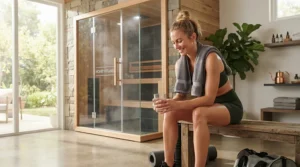
Steam Generator Capacity: What the Litres and Watts Really Mean
Steam generator capacity is the spec most listings quote and the one most buyers misread. Wattage is how hard the element heats water. Tank volume is how much water is available to boil.
At around 800W, a 2L pot will typically give you a comfortable 20-30 minute session before refilling. At 1000-1200W with a 3L tank, you get faster build-up and more staying power. Roughly speaking, bigger is better, provided your cabin has the volume to use it.
| Steamer class | Typical spec | What to expect | Best For |
|---|---|---|---|
| Entry | 800W, around 2L | Gentle, steady steam | OppsDecor, Durasage: short sessions |
| Mid | 1000W | Faster pre-heat | FniOk: all-round use |
| High | 1200W, 3L | Strongest build-up | Patiosunny: tall users, cool rooms |
| Shared | 800W, 3L | Long tank, slower warm-up | Costway: two users |
Notice that the Costway pairs a big tank with a modest element. That’s fine for patience but not for speed. The Patiosunny is the opposite end, trading space and cost for power. If your room is cold, spend the extra on wattage rather than on gadgets.
Humidity Level Control: Getting the Steam Right
Humidity level control sounds technical, but in these cabins it’s mostly practical. Most units don’t have a humidistat. You manage humidity through steam output levels, session length, the zip opening and the room’s own temperature.
Start low. Use the lowest steam setting for the first few sessions, then step up only if you want more. Cracking a zip slightly releases heat and humidity if the cabin feels oppressive. In a very damp bathroom, you’ll need less steam than in a cold, dry bedroom.
Temperature settings deserve respect too. Commercial guidance published by councils, such as Redbridge Council’s code of practice for saunas and steam rooms, says steam room temperatures must not exceed 50°C. That’s guidance for licensed premises, not a legal limit for your home. Even so, several portable units list maximums of 54-60°C, so the top setting is probably not where you want to live.
The sensible approach is simple: use mid-range settings, listen to your body, and leave if you feel dizzy.
Box vs Tent-Style Steam Units: Which Format Wins?
Box vs tent-style steam units is a real fork in the road. Here’s how the formats compare.
| Feature | Box-style | Tent-style | Best For |
|---|---|---|---|
| Structure | Rigid, upright walls | Soft, collapsible frame | Box: comfort. Tent: storage |
| Heat retention | Typically better | Variable | X-Vcak, Patiosunny |
| Storage | Bulkier | Folds smaller | Durasage, OppsDecor |
| Headroom | Often taller | Can feel snug | SereneLife for taller users |
| Two users | Rare | Possible | Costway |
A steam sauna box usually keeps steam around your torso and shoulders more reliably. Tents win on portability and cost. If you plan to set up weekly and put it away, a tent is perfectly sensible, and if it will live permanently in a spare corner, the box format feels more like a proper cabin.
My view is simple: choose the tent if space is the constraint and the box if comfort is. Either works if you buy the right steamer.
Practical Usage Guide: Setup, First Sessions and the First 30 Days
A few habits make the difference between a regular ritual and a dusty box in the loft.
Setup. Place the cabin on a waterproof, non-slip floor, away from carpets, curtains and furniture. Keep the steamer clear of the walls and run the cable so nobody can trip on it. Use distilled or filtered water if your area is hard, since limescale shortens a steamer’s life.
First sessions. Begin at 10-15 minutes on the lowest setting. Drink water beforehand and afterwards. Warwick University’s sauna and steam room policy advises not exceeding 20 minutes, which is a sensible ceiling for beginners.
After each use. Empty the steamer, wipe the interior, and leave the cabin open to dry fully. Damp fabric folded away is how mould starts.
Common mistakes in the first 30 days:
- 🚫 Cranking the temperature to the maximum
- 🚫 Skipping hydration
- 🚫 Folding the cabin away wet
- 🚫 Adding essential oils directly to the steamer (one listing specifically warns this can crack the lid)
Real-World Scenarios: Which Model for Which Home?
The flat dweller. Imagine a one-bed flat with a bathroom the size of a wardrobe. Floor space is gold. A compact tent such as the OppsDecor or Durasage folds away behind a door and takes about ten minutes to set up. Budget: under £120. Frequency: once or twice a week.
The couple. Two people, one spare room, and a shared appetite for weekend unwinding. The Costway is the only genuine two-seater here. You’ll want longer pre-heat and shorter shared sessions. Budget: around £70-£130.
The tall, power-hungry user. Taller than six feet, in a cold conservatory or garage-adjacent room. The Patiosunny offers the headroom and 1200W output, while the FniOk is a strong alternative if you prefer finer heat steps. Budget: £90-£150. Frequency: three to four times a week.
In each case, the right choice follows from space, room temperature and headcount rather than any single spec.
Problem → Solution Guide for Home Steam Cabins
Problem: weak steam. Check the steamer is clean and descaled, move to a higher setting, and pre-heat longer. In a cold room, a higher wattage unit solves it permanently.
Problem: it feels stuffy. Open a zip slightly, lower the steam level and shorten the session. Hotter isn’t better.
Problem: limescale in the pot. Use filtered or distilled water, and descale regularly using the manufacturer’s guidance.
Problem: condensation on the floor. Lay an absorbent mat and keep the cabin on a hard, wipeable surface.
Problem: mouldy smell. That means the cabin was stored damp. Dry it fully each time and air it near a window before folding. Models such as the Durasage and FniOk that fold flat are particularly vulnerable if stored wet.
Personal Steam Sauna for Home vs Alternatives
| Option | Set-up | Space | Running cost | Best For |
|---|---|---|---|---|
| Personal steam sauna for home | Minutes | Folds flat | Low | FniOk, Durasage: flexible use |
| Gym steam room | None | None at home | Membership | People who enjoy the social side |
| Dry barrel or cabin sauna | Installation | Large | Higher | Garden owners with budget |
| Hot bath | Minimal | Existing bath | Water and heating | Occasional relaxation |
As an illustration, a 1000W steamer running for 30 minutes uses about 0.5 kWh. At 28p per kWh, that’s roughly 14p a session. A gym membership costs far more per visit unless you go constantly. A hot bath is cheaper to set up but offers no steam enclosure.
Therefore, if you’ll use it more than once a fortnight, a personal steam sauna for home usually wins on convenience. If you only fancy it occasionally, the gym or a hot bath may be simpler.
Features That Actually Matter (And Those That Don’t)
Worth caring about:
- ✅ Anti-dry protection and auto shut-off
- ✅ Tempered glass or sturdy lid
- ✅ A usable timer
- ✅ Multiple steam levels for humidity level control
- ✅ A chair that doesn’t wobble
Mostly marketing:
- ❌ A remote with a 30 ft range, since you’re sitting two feet from the steamer
- ❌ Included foot rollers and herb boxes
- ❌ “Detox” claims, which don’t have strong evidence behind them
- ❌ Ever more heat levels without better control
Spend your budget on the steamer and structure. Treat accessories as nice extras.
Safety, Electrical Standards and UK Compliance
Steam, electricity and bare skin deserve a careful approach. First, insist on a UK-spec product: 230V, a BS 1363 plug and clear UKCA or CE marking, with UK-based returns or support where possible. Many cheaper listings are rated at 110V, which isn’t suitable for UK mains.
Second, place the steamer on a stable, waterproof surface, away from flexible fabric. Never leave it unattended while running.
Third, know who should take care. General guidance advises caution if you’re pregnant, have heart disease, or have very high or low blood pressure. People on certain medications should check with a GP first. Children shouldn’t use steam units unsupervised. Don’t use it after alcohol or a heavy meal.
Finally, stop immediately if you feel dizzy, faint or unwell. This article isn’t medical advice.
Long-Term Cost and Maintenance
The purchase price is the smaller number. Running costs are pennies per session, as shown earlier. The real expenses are replacements.
Steamers and fabric are the usual casualties. Limescale shortens steamer life, and damp storage rots fabric. A £100 unit that lasts five years of weekly use costs about 40p a session before electricity. A unit that fails in a year costs far more.
Maintenance is simple:
- 🧼 Descale monthly if you have hard water
- 🧼 Wipe and dry the interior after each use
- 🧼 Check zips and seams every few months
- 🧼 Store the steamer empty
Models with a 3L stainless pot, like the Costway, are marketed as durable. Spend a little more upfront on a sturdier steamer, and you’ll likely save money overall.
FAQ: Personal Steam Sauna for Home
❓ How much does a personal steam sauna for home cost in the UK?
❓ Is a steam sauna box better than a tent?
❓ Can I use a portable steam sauna in a bathroom?
❓ How long should I stay in a home steam sauna?
❓ Which steamer wattage is best?
Conclusion
A personal steam sauna for home isn’t a luxury reserved for spa owners. It’s a plug-in, fold-flat ritual that costs pennies per session. The trick is matching the unit to your space, your room temperature and your height.
If you want an easy entry, start with the Durasage or OppsDecor. For all-round control, the FniOk is the safer middle path. If you’re tall or your room is chilly, the Patiosunny offers the headroom and power. Couples should look at the Costway, while the SereneLife and X-Vcak suit comfort-first and control-focused buyers once you’ve confirmed their steamer specs.
Remember the three essentials: UK-spec electrics, sensible temperatures, and a dry cabin after every session. Get those right, and the format question of box vs tent-style steam units becomes a matter of taste.
Recommended for You
- Portable Sauna Tent For Travel: 7 Smart UK Picks (2026)
- Sauna Tents Under £100: 7 Best Budget Picks For UK Homes (2026)
- Sauna Tent For Home Use: 7 Essential Picks For UK Homes (2026)
Disclaimer: This article contains affiliate links. As an Amazon Associate, I earn from qualifying purchases. If you purchase products through these links, we may earn a small commission at no additional cost to you.
✨ Found this helpful? Share it with your friends! 💬🤗
