
In This Article
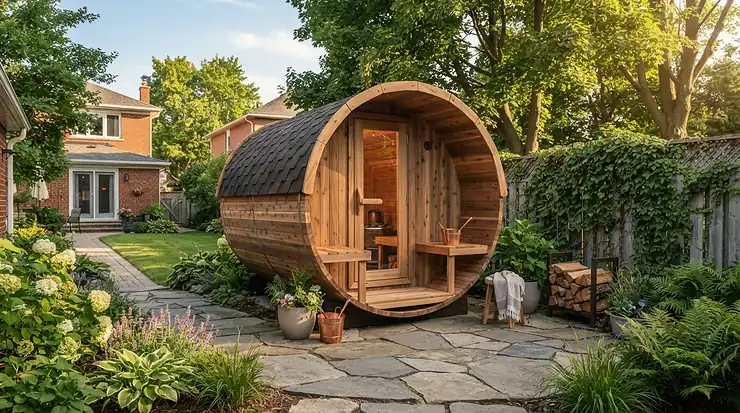
There’s a particular kind of quiet that settles over a garden once you’ve got a fire going in a sauna stove — logs crackling, stones ticking as they heat, condensation building on a little window. That’s the appeal of a wood burning sauna for garden use, and it’s a different experience entirely from flicking a switch on an electric heater. A wood burning sauna for garden installation trades convenience for ritual: you’re building a fire, tending it, and earning your heat rather than just requesting it. In the UK in 2026, growing numbers of homeowners are choosing wood-fired stoves for their garden saunas specifically because it means no electrician, no extra load on the consumer unit, and — for those with their own woodland or a cheap log supplier — genuinely low running costs.
But a wood burning sauna for garden setup isn’t a plug-and-play purchase. You’re dealing with a live flame, a chimney that has to be sited correctly, and smoke control rules that catch out a surprising number of buyers who assume “it’s just a garden building, so anything goes.” Get the stove, the flue, and the fuel right, though, and you’ve got one of the most authentic, low-cost-to-run wellness features you can put in a British back garden.
This guide covers seven real wood-fired sauna products and stoves available to UK buyers, spanning portable off-grid tents through to full cedar cabins, plus the practical detail — regulations, firewood consumption, heat-up times — that most product listings skip entirely.
Quick Comparison Table
| Product | Type | Heat-Up Time | Best For |
|---|---|---|---|
| PortaSauna HEX Complete | Portable tent + wood stove | ~20 minutes | Off-grid, renters, small gardens |
| Harvia M3 Wood-Burning Sauna Stove | Stove only | 30-45 minutes | Budget cabin builds |
| Harvia Linear 16 WK160C | Stove only | 30-40 minutes | Mid-range cabin upgrades |
| Timberin Barrel Sauna | Full barrel cabin | 40-60 minutes | Fast-heating small gardens |
| Quick-garden ELDA Outdoor Sauna | Full cabin + Harvia stove | 45-60 minutes | Families, safe heater layout |
| Polhus Sauna Barrel Loke | Full barrel cabin | 40-55 minutes | Compact gardens |
| EdenHut Wood-Burning Garden Sauna | Full cedar cabin | 45-70 minutes | Premium, larger gardens |
Looking at the spread above, the gap between a stove-only purchase (Harvia M3, Harvia Linear 16) and a complete cabin (EdenHut, Quick-garden ELDA) is really a decision about whether you’re building or buying — stoves suit anyone with an existing summerhouse shell or DIY ambitions, while complete kits suit buyers who want a weekend assembly and a warranty covering the whole structure. The barrel-shaped options (Timberin, Polhus) consistently heat faster than square cabins of similar volume, simply because there’s less dead air in the corners for the stove to fight against.
💬 Just one click — help others make better buying decisions too!😊
Top 7 Wood Burning Saunas for Garden: Expert Analysis
1. PortaSauna HEX Complete — best for off-grid and rental gardens
The PortaSauna HEX Complete is a hexagonal pop-up tent sauna built specifically to need nothing from your house except a flat patch of lawn. Constructed from 420D Oxford outer fabric with needled cotton insulation and a CPAI-84 flame-retardant lining, it erects to roughly 180 x 180 x 210cm and pairs with a stainless-steel wood-fired stove designed to bring the tent up to sauna temperature in around 20 minutes.
Because there’s no chimney to install into a roof and no groundworks, this is the one product on this list that a renter or a leasehold garden-flat owner could realistically use without touching planning rules at all. Reviewers consistently report that the fabric handles UK rain and wind better than expected, though a few note that the stove needs feeding every 20-30 minutes to hold peak heat through a full session.
It’s aimed squarely at people who want the ritual of a real wood fire and don’t want to commit to a permanent structure — or who might move house in a couple of years and want to take their sauna with them.
Pros:
- ✅ No chimney installation or groundworks required
- ✅ Reaches sauna temperature in around 20 minutes
- ✅ Fully portable — packs down and travels with you
Cons:
- ❌ Smaller stove needs frequent refuelling during a session
- ❌ Fabric shell won’t match the longevity of a timber cabin
At the time of research, complete packages sit in the £1,800-£2,000 range, which is genuinely competitive once you factor in that no separate flue kit or base is needed — for anyone unsure whether a permanent wood burning sauna for garden use suits their lifestyle, this is the low-risk way to find out.
2. Harvia M3 Wood-Burning Sauna Stove — best budget entry stove
The Harvia M3 is a floor-mounted, 16.5kW wood-burning stove built for small sauna rooms of roughly 211-459 cubic feet, and it’s the stove most UK cabin builders reach for when the budget is tight but the brand still needs to be trustworthy. Its glass door lets the fire glow into the room — a detail that matters more than it sounds, because watching the flame is genuinely part of the sauna experience for a lot of users — while the 66lb stone capacity is enough to produce proper löyly when water hits the rocks.
Based on the spec comparison with pricier Harvia ranges, the M3 sacrifices the water-boiler option and some of the styling of the Legend series, but the core heating performance for a small garden cabin is essentially the same fire chamber technology. Reviewers frequently mention it as reliable and straightforward to install, with the main criticism being that the ash box fills faster than expected under regular use.
This is the stove for anyone retrofitting an existing summerhouse or building their own cabin from a kit that ships without a heater.
Pros:
- ✅ Genuine Finnish engineering at an entry price point
- ✅ Glass door adds visible flame to the sauna atmosphere
- ✅ Efficient air circulation suited to small rooms
Cons:
- ❌ No water-boiler attachment option like pricier Harvia models
- ❌ Ash box needs emptying more often than larger stoves
Prices for the stove alone typically fall in the £600-£900 range before stones and chimney kit, making it strong value for anyone assembling a wood burning sauna for garden use piece by piece rather than buying a complete package.
3. Harvia Linear 16 WK160C — best mid-range stove upgrade
The Harvia Linear 16 WK160C steps up from the M3 with a cast-iron glass door and dedicated combustion air channels engineered for a quicker, cleaner burn — a genuinely useful upgrade if your garden is anywhere near neighbours, since a cleaner burn means less visible smoke and fewer complaints. Rated at 17.9kW and suited to sauna rooms from 212 to 565 cubic feet, it has more headroom than the M3 for a slightly larger or better-insulated cabin, with an 88lb stone capacity that holds heat longer through a session.
What most buyers overlook about this model is that the stainless-steel frame resists the corrosion that can creep into cheaper painted-steel stoves after a few damp British winters in an unheated outbuilding. User reviews consistently flag the optional door-direction feature as a genuine practical win, since it lets you orientate the glow towards the bench seating rather than a blank wall.
It suits anyone upgrading from a starter stove or building a slightly larger cabin than the M3’s ceiling allows.
Pros:
- ✅ Cleaner burn thanks to dedicated combustion air channels
- ✅ Stainless-steel frame resists damp-related corrosion
- ✅ Handles larger sauna rooms than entry-level stoves
Cons:
- ❌ Noticeably pricier than the entry-level M3
- ❌ Larger footprint needs more clearance in smaller cabins
Expect to pay in the £700-£1,000 range for the stove on its own, which is a sensible mid-point for anyone who’s outgrown a starter sauna or wants a longer-lasting build from day one.
4. Timberin Barrel Sauna — best fast-heating shape for small gardens
The Timberin Barrel Sauna takes the curved, cylindrical design that Nordic saunas have used for decades and applies it to a compact UK garden footprint, typically around 2 metres in length for the smaller configurations. The barrel shape minimises dead air space compared with a square cabin of equivalent floor area, which in practice means the wood stove doesn’t have to work as hard to bring the whole room up to temperature — a real advantage when you’re testing patience on a cold January evening.
Available with wood-burning or electric heater options, the wood-fired configuration is the one most buyers pick for genuine off-grid appeal, and the curved roof sheds rain naturally rather than pooling water the way flat-roofed garden buildings sometimes do. Reviewers highlight the space efficiency for smaller plots and the swift heat-up as standout points, though a handful mention that headroom near the curved walls is tighter than a rectangular cabin offers.
It’s a strong pick for anyone with a compact garden who still wants the full sauna ritual rather than a portable tent.
Pros:
- ✅ Curved shape heats faster than a square cabin of similar size
- ✅ Compact roughly 2-metre footprint suits small gardens
- ✅ Curved roof sheds rain without additional guttering
Cons:
- ❌ Reduced headroom near the curved side walls
- ❌ Fewer customisation options than modular cabin ranges
Barrel sauna packages including the wood stove generally land in the £3,000-£5,000 range depending on size, which puts it firmly in the mid-market for anyone comparing a wood burning sauna for garden use against a full cabin build.
5. Quick-garden ELDA Outdoor Sauna — best for family safety layout
The Quick-garden ELDA Outdoor Sauna ships as a complete wooden construction with floor bearers, sauna benches, doors, windows and 20mm-thick flooring, built around a Harvia wood-burning stove positioned deliberately away from the three rows of benches. That heater placement is the standout feature here — it’s designed so the stove doesn’t restrict movement around the room and keeps a genuinely safe distance from bathers, which matters a great deal if children or less mobile relatives will be using the sauna.
Based on the layout alone, this is one of the more thoughtfully engineered cabins for households rather than solo enthusiasts, since safe air circulation around the stove reduces the risk of accidental contact with a very hot surface. The build includes options to add an insulation package, roof coverings and other accessories, so you can tailor the spec without switching brands entirely.
Customer feedback around Quick-garden’s range tends to praise the completeness of the kit and the option to phone through for a custom configuration, though as with most flat-pack cabin kits, assembly is a multi-day job rather than a weekend project for a single pair of hands.
Pros:
- ✅ Wood stove positioned for genuine bather safety
- ✅ Three rows of benches suit family or small-group use
- ✅ Customisable accessories including insulation packages
Cons:
- ❌ Assembly is a substantial multi-day undertaking
- ❌ Larger footprint needs a correspondingly larger garden
At the time of research, complete cabins in this range typically run from £4,000 up into the £7,000s depending on size and accessories, positioning it as a serious mid-to-premium investment for a family garden.
6. Polhus Sauna Barrel Loke — best space-saving barrel for tight plots
The Polhus Sauna Barrel Loke is explicitly marketed as the space-saving option in Polhus’s range, aimed at gardens where a full square cabin simply won’t fit without eating the whole lawn. It arrives as a precision-cut kit — timber, doors, windows and a compatible heater of your choice — with step-by-step instructions that Polhus says beginners can follow, plus a professional installation service if you’d rather not spend a weekend with a spirit level.
Choosing the wood-burning heater option keeps the barrel fully off-grid, and the curved profile gives it the same fast heat-up advantage as the Timberin barrel above. What the spec sheet won’t tell you, but the product positioning makes clear, is that this is designed for solo sessions or intimate two-to-three-person use rather than family group bathing — the compact diameter simply doesn’t accommodate the three-bench layout of the larger cabins on this list.
It’s a genuinely strong pick for a couple wanting a low-footprint wellness feature without sacrificing the wood-fired experience.
Pros:
- ✅ Compact footprint fits small or narrow gardens
- ✅ Precision-cut kit with clear assembly instructions
- ✅ Professional installation available if preferred
Cons:
- ❌ Limited capacity compared with three-bench cabins
- ❌ Heater sold separately, adding to total build cost
Expect a barrel-plus-stove package to sit in the £3,000-£4,500 bracket, making the Loke one of the more accessible full-cabin routes into wood-fired garden sauna ownership.
7. EdenHut Wood-Burning Garden Sauna — best premium cedar cabin
The EdenHut Wood-Burning Garden Sauna sits at the top of this list for buyers who want the full traditional Nordic atmosphere and have the garden space to do it justice. EdenHut positions its wood-burning stoves as “particularly suited to larger gardens where the ceremonial aspect of fire building enhances the overall wellness experience,” and the build quality backs that framing up — the brand’s signature Thermo Wood enhancement gives the timber genuinely better moisture resistance for the decades of British weather a permanent outdoor structure has to survive.
Here’s what to weigh: EdenHut also offers modern electric heaters with Wi-Fi preheating for the same shells, so choosing wood-fired here is a deliberate lifestyle decision rather than the only option available, and it’s worth being honest with yourself about whether you’ll actually want to tend a fire every single session once the novelty wears off.
Reviewers and the brand’s own positioning consistently point to the specialised UK-wide delivery and installation consultation as a differentiator versus smaller manufacturers, which matters if you’re in a trickier urban plot like London and need someone who’s dealt with tight access before.
Pros:
- ✅ Thermo Wood construction built for long-term UK weather
- ✅ UK-wide delivery with specialist urban installation advice
- ✅ Full traditional Nordic wood-fired atmosphere and ceremony
Cons:
- ❌ Among the pricier options on this list
- ❌ Needs a genuinely spacious garden to suit the design
Complete premium cabins in this bracket generally start around £5,000 and can run well past £8,000 with larger footprints and accessories, so it’s a considered investment rather than an impulse buy — but for buyers set on the full ceremonial wood-fired experience, it’s hard to beat.
Setting Up and Maintaining Your Wood Burning Sauna
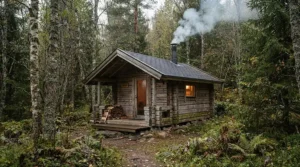
Getting a wood burning sauna for garden use running well starts before you ever light a fire. Site the cabin or tent on level, well-drained ground — a slight slope away from the door prevents rainwater pooling against the timber, and a proper base (concrete pad, decking, or compacted gravel) stops damp wicking up into the floor bearers. Once the stove is in, season it gently: a couple of small, low-temperature fires before your first proper session cures any protective coatings and burns off manufacturing residue, which otherwise produces an acrid smell that puts people off the whole idea.
For ongoing maintenance, sweep the flue at least once a season — HETAS and the National Association of Chimney Sweeps both recommend this for wood-burning appliances specifically, since creosote build-up from burning logs is a genuine chimney-fire risk that gas or electric heaters simply don’t carry. Empty the ash box after every two or three sessions rather than letting it fill completely, because an overfull ash pan restricts the air intake the fire needs to burn cleanly. Common first-30-days mistakes include burning unseasoned wood straight from a garden tree (it smokes heavily and barely heats the stones), skipping the initial curing fires, and forgetting to check the flue clearance from any combustible cladding before the first serious burn. Get these basics right and a wood-fired stove will comfortably outlast most electric heating elements.
Which Wood Burning Sauna Suits Your Garden? Real-World Scenarios
Picture a couple in a two-bedroom terrace with a modest 4×6 metre garden and no interest in a permanent build — the PortaSauna HEX Complete fits that life perfectly, since it needs no groundworks, no chimney through a roof, and can be packed away if they move. Now picture a family of four in a semi-detached house with a decent-sized rear garden, wanting a genuine wellness space the kids can eventually use safely — the Quick-garden ELDA Outdoor Sauna answers that brief directly, thanks to its deliberately safe heater placement and three-bench capacity for group sessions.
Finally, picture a couple with a large rural garden or smallholding, already comfortable maintaining a woodburner indoors and keen to make the sauna the centrepiece of the garden — the EdenHut Wood-Burning Garden Sauna or a self-built cabin around the Harvia Linear 16 WK160C stove both suit that ambition, letting them commit fully to the ceremonial, off-grid wood-fired experience without compromising on space or build quality. In each case the decision comes down to garden size, household composition, and how much of the “ritual” of fire-tending you actually want versus how much convenience you’re willing to trade for it.
How to Choose a Wood Burning Sauna for Garden Use
- Measure your actual usable space first. A barrel sauna needs less footprint than a square cabin of the same capacity, so measure before falling for photos of a spacious model that won’t fit.
- Decide stove-only versus complete kit. If you already have a summerhouse shell or DIY skills, a stove like the Harvia M3 saves money; if not, a complete cabin removes the guesswork.
- Check your smoke control status before buying. Confirm with your local council whether your postcode sits in a designated smoke control area, since this can rule out standard wood stoves entirely.
- Match stone capacity to session style. More stones generally means longer heat retention and better löyly quality when water hits them — worth prioritising if you enjoy longer sessions.
- Think about flue routing in advance. A tent sauna needs no roof penetration at all; a permanent cabin does, and that changes both cost and any building notification requirements.
- Factor in fuel logistics, not just stove price. A cheap stove that burns through logs quickly can cost more over a season than a pricier, more efficient model.
- Consider resale and portability. Renters or those expecting to move should weigh a portable tent sauna heavily, since a permanent cabin is a genuine fixture, not a removable asset.
Features That Actually Matter (And Those That Don’t)
Genuine air-channel design for a cleaner burn matters enormously — it affects how much smoke drifts over the fence and how often you’re scraping soot off glass, and it’s one of the real differences between the Harvia Linear 16 and cheaper unbranded stoves. Stone capacity matters too, directly shaping how satisfying the steam feels. What matters far less than marketing suggests is a stove’s raw kW rating in isolation: a 24kW stove in a badly insulated, draughty cabin will still struggle, while a well-matched 16.5kW Harvia M3 in a tight, well-sealed room heats efficiently. Ornamental styling — decorative stove legs, elaborate door shapes — adds cost without adding heat, so buyers chasing the lowest genuine cost-per-session should prioritise build quality and air-channel engineering over looks every time.
Wood Burning Sauna for Off-Grid Use
For land without a mains connection — smallholdings, allotments with cabins, or a garden where running an electrical supply would mean expensive trenching — a wood burning sauna for off-grid use is often the only realistic route to a hot sauna at all. Unlike electric heaters, which need a dedicated circuit and usually professional electrical certification, a wood-fired stove needs nothing but a chimney and a fuel supply, making it genuinely independent of the grid. Portable options like the PortaSauna HEX Complete take this furthest, needing no fixed installation whatsoever, while permanent cabins fitted with a Harvia or equivalent stove suit those wanting a fixed off-grid feature on land they own outright.
The trade-off is workload: off-grid wood-fired saunas need a dry, accessible log store nearby, regular ash disposal, and someone willing to tend a fire rather than press a button. For remote plots, glamping sites and rural properties, that trade-off is usually an easy one to accept, since the alternative — a generator running an electric heater — is noisier, needs fuel of its own, and carries far higher upfront and running costs than firewood.
Flue and Chimney Regulations for Garden Saunas
Before committing to any permanent wood burning sauna for garden use, check two separate things: planning rules and building regulations, because they’re not the same and both apply. Garden sauna cabins generally fall under permitted development as an outbuilding “incidental to the enjoyment of the dwellinghouse,” per the Planning Portal’s outbuildings guidance — but that only holds if the structure stays under 2.5 metres when within 2 metres of a boundary, doesn’t sit forward of the house, and the property isn’t listed or in a conservation area with tighter restrictions.
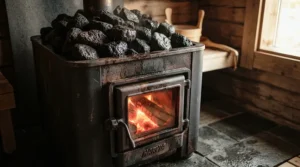
Building regulations are a separate hurdle specifically for the stove and flue. Installing a wood-burning appliance and its chimney is covered by Approved Document J, and if your installer isn’t HETAS-registered, you’ll need to notify your local authority’s building control department directly rather than relying on self-certification. The flue diameter must never be smaller than the stove’s outlet — typically 125mm or 150mm depending on the appliance’s kW rating — and the chimney terminal generally needs to sit at least a metre above any roof penetration it passes through. Crucially, check whether your postcode falls within a Smoke Control Area using the gov.uk smoke control area guidance: in these zones you can only burn authorised fuel or use a Defra-exempt appliance, and most standard wood-burning sauna stoves aren’t on the exempt list, which can rule out a wood-fired build entirely in parts of London and other urban centres.
Firewood Consumption: Long-Term Costs and Maintenance
Running costs for a wood burning sauna for garden use come down almost entirely to firewood, and the numbers are genuinely modest compared with most people’s assumptions. A typical session burns through roughly one small crate or a couple of standard-size nets of logs, putting per-session fuel costs somewhere in the £2-£4 range depending on wood quality and local pricing — broadly comparable to a gas sauna running on propane, and considerably cheaper per session than an electric heater pulling 4-9kW for an hour at current household electricity rates.
The catch is that fuel quality dictates both cost and performance dramatically. Since May 2021 it’s been a legal requirement in England that firewood sold in volumes under 2 cubic metres carries Woodsure’s Ready to Burn certification, confirming a moisture content below 20%. Wet, unseasoned wood at 40-60% moisture produces roughly half the heat output of properly dried logs, because so much energy goes into boiling off water rather than heating the stones — meaning a false economy of buying cheap, damp logs actually costs more in the long run through slower heat-up times and heavier consumption per session. Budgeting for a season of regular use (say, two sessions a week through fireplace-friendly months), most households spend somewhere in the low hundreds of pounds annually on Ready to Burn certified logs — a genuinely small ongoing cost next to the purchase price of the sauna itself.
Heat-Up Time Comparison: Wood vs Electric vs Gas Saunas
On paper this means wood-fired stoves are the slowest of the three main heating methods to reach full sauna temperature, typically needing 30-70 minutes depending on cabin size and insulation, against roughly 15-20 minutes for a flueless gas heater and often less than that for a well-specified electric heater with a strong kW rating relative to room volume. That gap matters if you crave spontaneous sessions, but it shrinks considerably with barrel-shaped cabins like the Timberin Barrel Sauna and Polhus Sauna Barrel Loke, both of which cut dead air space and noticeably close the heat-up gap versus square cabins.
What most comparisons miss is that heat-up time isn’t the whole story: a wood fire keeps producing radiant warmth throughout the session as you feed it, giving a different, arguably richer heat profile than an electric element cycling on and off via a thermostat. For anyone planning ahead — lighting the stove 45 minutes before guests arrive, say — the slower start is a non-issue; for anyone wanting to duck into the sauna on a whim after work, gas or electric will suit daily convenience better.
Wood Burning Sauna vs Electric Sauna: Which Wins for UK Gardens?
The honest answer is that it depends entirely on what you’re optimising for. Electric saunas win decisively on convenience: near-instant ignition via a thermostat, no ash to clear, no fuel to store, and increasingly, Wi-Fi preheating so the cabin is ready before you’ve even walked outside — brands like EdenHut offer this on the same shells that also accept wood stoves. Wood-fired options win on running cost independence and atmosphere: no reliance on the grid, no risk of a costly electrical fault, and an experience that a genuinely large proportion of sauna enthusiasts describe as simply more authentic, closer to the original Finnish tradition the whole practice descends from.
There’s a genuine health dimension worth weighing too. Research summarised by Harvard Health following the long-running Finnish KIHD cohort study associates frequent sauna bathing with lower rates of fatal cardiovascular events — the mechanism relates to heat exposure itself rather than the fuel source, so this benefit applies equally whether your heater is wood-fired or electric. Where wood genuinely pulls ahead is for off-grid land and for anyone who simply values the fire-tending ritual as part of the wellness experience rather than an inconvenience to be automated away. Where electric pulls ahead is ease, speed, and zero fuel logistics — for a busy household wanting a sauna session on a Tuesday evening with minimal fuss, that convenience often wins out.
Frequently Asked Questions
❓ Do I need planning permission for a wood burning sauna for garden use?
❓ Can I install a wood burning sauna stove myself?
❓ How much firewood does a garden sauna use per session?
❓ Is a wood burning sauna allowed in a smoke control area?
❓ How long does a wood burning sauna take to heat up?
Conclusion
A wood burning sauna for garden use isn’t the fastest or most convenient route to a hot sauna in 2026, but for a lot of UK buyers that’s precisely the point — the fire-tending, the crackle of logs, the independence from the grid, all add up to an experience electric heaters simply can’t replicate. Whether that means a portable off-grid tent like the PortaSauna HEX Complete, a budget stove such as the Harvia M3 dropped into a DIY build, or a full premium cedar cabin from EdenHut, the seven options above cover every realistic garden size and budget in the UK market. Get the regulations right — planning, Building Regulations Part J, and smoke control status — before you buy, source properly seasoned Ready to Burn firewood, and a wood-fired garden sauna will reward you with genuinely low running costs and a wellness ritual worth stepping outside for on a cold evening.
✨ Don’t Miss These Exclusive Deals!
🔍 Take your garden sauna project to the next level with these carefully selected wood-fired stoves and cabins. Click on any highlighted item to check current pricing and availability. These picks will help you build an authentic, low-cost wood burning sauna your whole household will love! 🔥🪵
Recommended for You
- Electric Sauna Cabin For Home: 7 Best UK Picks (2026)
- Electric Sauna Heater: 7 Best UK Picks (Avoid Mistakes) 2026
- Traditional Sauna vs Infrared Sauna: 7 Best Buys For UK (2026)
Disclaimer: This article contains affiliate links. As an Amazon Associate, I earn from qualifying purchases. If you purchase products through these links, we may earn a small commission at no additional cost to you.
✨ Found this helpful? Share it with your friends! 💬🤗
