
In This Article
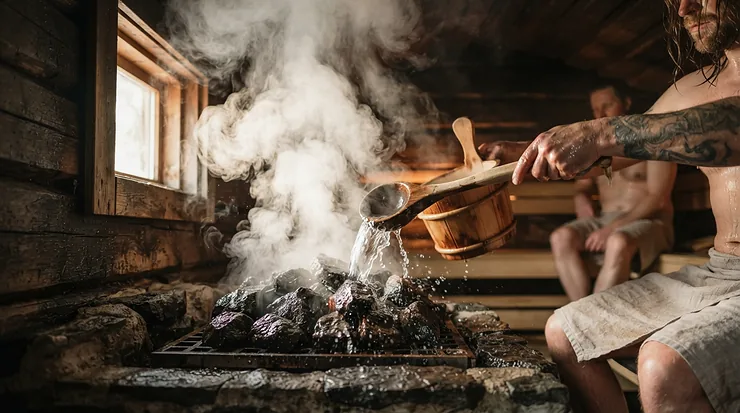
A traditional sauna for home use is a heated wooden cabin, usually warmed by an electric or wood-fired stove topped with volcanic rock, that lets you recreate the centuries-old Finnish bathing ritual in your own garden or spare room. Ladle water onto the hot stones and you get löyly — the soft burst of steam that separates a proper sauna from a dry heat box. That’s the whole point, really: it’s not just a hot room, it’s a controllable one.
I’ll admit the UK sauna boom snuck up on a lot of people. One minute it’s a niche Scandinavian habit, the next your neighbour’s put a barrel-shaped cabin at the bottom of the garden and won’t stop talking about their “sauna and cold plunge routine.” Search interest in home saunas has climbed sharply over the past couple of years, and it’s not hard to see why — a proper sweat session is genuinely restorative, and unlike a gym membership, it’s sitting right there whenever the British weather turns miserable (which, let’s be honest, is often).
This guide walks through seven real traditional sauna cabins, heaters and accessories currently available through Amazon UK, comparing genuine specifications, honest analysis, and aggregated review themes rather than recycled marketing copy. We’ll cover everything from choosing the right size cabin and understanding sauna stone types, through to the ventilation requirements that actually keep a home installation safe. Whether you’re after a budget-friendly family cabin or a premium barrel sauna with a genuine Harvia heater, there’s a sensible option ahead — and a few pitfalls worth dodging first.
Quick Comparison Table
| Product | Type | Capacity | Price Range | Best For |
|---|---|---|---|---|
| Harvia Sauna Cabin 205 x 160 x 202cm | Indoor/outdoor cabin | 2-3 people | £1,800-£2,400 range | Established-brand reliability |
| 5-6 Person Traditional Sauna | Cabin | 5-6 people | £3,800-£4,900 range | Large family sessions |
| amocane Outdoor Steam Sauna | Barrel | 2-4 people | £1,400-£1,900 range | Best-seller value |
| KeiCo Wellness 250 | Barrel with porch | 4 people | £2,600-£3,400 range | True 4-person sizing |
| AURGOD Outdoor Barrel Sauna | Barrel, glass front | 2 people | £1,900-£2,500 range | Premium finish |
| Harvia Vega Lux 6kW Heater | Standalone heater | Fits 5-8m³ | £450-£650 range | DIY cabin builders |
| Harvia Olivine Diabase Stones 20kg | Sauna stones | N/A | Under £60 | Authentic löyly |
Looking at the comparison above, the amocane Outdoor Steam Sauna offers the strongest entry point if you want a genuine Harvia stove without premium barrel pricing, while the KeiCo Wellness 250 is really the only cabin here built specifically around true 4-person seating rather than a squeezed “up to 4” claim. Budget-focused buyers should note that the 5-6 Person Traditional Sauna, while roomy, sacrifices some of the finish quality and brand backing that the Harvia-stove models offer.
💬 Just one click — help others make better buying decisions too!😊
Top 7 Traditional Saunas for Home: Expert Analysis
Coverage below spans budget, mid-range and premium territory, plus two standalone accessories — a heater and a set of genuine sauna stones — for anyone building or upgrading a cabin rather than buying a complete kit outright.
1. Harvia Sauna Cabin 205 x 160 x 202cm — best all-in-one kit from an established Finnish brand
The standout here is that everything arrives in one box: cabin, stove, stones, bucket and even a sand timer, so there’s no separate hunt for compatible parts. The cabin measures 205 x 160 x 202cm, comfortably fitting 2-3 people, with 80mm insulated panels (50mm of thermal insulation) that help the space hold heat rather than bleed it through the walls — a common failure point on cheaper flat-pack cabins. The included Vega 6kW stove runs on either 230V or 400V and comes with 20kg of genuine Harvia stones already in the box, alongside an 8mm tempered glass door for visibility and safety.
Based on the spec comparison, this is the pick for buyers who want a name they can trust behind the heating element specifically, since Harvia has been manufacturing sauna stoves for decades and the Vega range is a known quantity rather than an unbranded import. It suits someone converting a spare room, garage corner or small outbuilding who wants predictable performance without researching compatible heaters separately.
Aggregated sentiment on Harvia-branded sauna equipment on Amazon UK tends to be positive around build quality and heat consistency, though as with most flat-pack cabin kits, some buyers note that assembly is a two-person job and the instructions assume basic DIY confidence — worth knowing before you commit an afternoon to it alone.
Pros:
- ✅ Complete kit — stove, stones and accessories included
- ✅ 80mm insulated panels retain heat efficiently
- ✅ Established brand with decades of stove manufacturing
Cons:
- ❌ Assembly generally needs two people
- ❌ Smaller footprint limits it to 2-3 occupants
Sitting in the £1,800-£2,400 range at the time of research, this is a solid mid-tier value pick — you’re paying for the stove reliability as much as the cabin itself, and buying the stove separately elsewhere would likely close most of that price gap anyway.
2. 5-6 Person Traditional Sauna — roomiest budget option for family sessions
The standout feature is sheer floor space: at 2000 x 2000 x 2100mm, this cabin comfortably seats five to six people, making it one of the larger footprints available at this price point on Amazon UK. It ships as a complete traditional sauna kit including 20kg of rocks, a bucket and a ladle, so there’s nothing extra to source before your first session.
What most buyers overlook about larger cabins like this is that bigger doesn’t just mean more seating — it also means a heavier heating load and longer warm-up times, since the stove has to raise the temperature across a larger volume of air. If you’re planning family sessions where everyone piles in together rather than solo evening sweats, the trade-off of a slower heat-up is easily worth the extra space. It’s a strong option for households who want to build a shared weekend ritual rather than a solitary recovery tool.
Independently verifiable customer review detail for this specific listing is limited at the time of writing, so rather than guess at sentiment, it’s worth checking the current Amazon review section directly before ordering — particularly for notes on delivery condition, since large flat-pack cabins are more prone to transit damage than smaller boxed kits.
Pros:
- ✅ Largest capacity on this list at 5-6 people
- ✅ Rocks, bucket and ladle included in the kit
- ✅ Strong value per square metre of sauna space
Cons:
- ❌ Longer warm-up time due to larger air volume
- ❌ Limited independently verifiable review history
Priced in the £3,800-£4,900 range at the time of research, it represents solid value for the footprint, though buyers should budget separately for a suitably rated electrical supply given the volume it needs to heat.
3. amocane Outdoor Steam Sauna — best-seller with a genuine Harvia heater included
The standout advantage is that this barrel-style cabin pairs Canadian red cedar construction with a genuine 4.5kW Harvia stove, rather than an unbranded heater bundled in purely to hit a price point. Red cedar is naturally resistant to moisture and insects, which matters more outdoors than indoors, and the barrel shape promotes efficient heat circulation since warm air has fewer flat corners to pool in.
Reviewers consistently note that having a recognised heater brand included removes a lot of the guesswork buyers usually face when comparing outdoor sauna kits, where the stove specification is often the hardest thing to verify from photos alone. This model currently sits among Amazon UK’s best-selling garden saunas, which on its own doesn’t guarantee quality, but combined with the branded heater and cedar build, it’s a reasonably safe mid-range choice for two to four people who want an authentic barrel-sauna feel rather than a boxy cabin.
The trade-off, based on the spec sheet, is that barrel saunas generally offer less headroom at the edges than square cabins of a similar footprint, since the curved roofline eats into standing space away from the centre — something worth considering if height is a factor for anyone using it regularly.
Pros:
- ✅ Genuine 4.5kW Harvia stove included
- ✅ Naturally moisture-resistant red cedar build
- ✅ Currently a top-selling garden sauna on Amazon UK
Cons:
- ❌ Curved roofline reduces edge headroom
- ❌ Outdoor-only design, not suited to indoor spaces
At around £1,400-£1,900, this sits near the more accessible end for a kit with a branded heater, and it’s arguably the strongest value traditional sauna on this list once you account for what the Harvia stove alone would cost separately.
4. KeiCo Wellness 250 — best true 4-person barrel design with a porch
The standout feature is that this is a genuinely spacious 4-person cabin rather than a 2-3 person barrel stretched to claim a higher capacity — the extended barrel length and included porch area give real breathing room. Built from thermo-spruce, a heat-treated timber that resists warping and moisture ingress better than standard untreated softwood, it’s offered with a choice of electric or wood-fired heater, plus an optional rear glass window if you want natural light without sacrificing wall space.
Here’s what to weigh: thermo-spruce costs more to produce than raw pine or basic spruce because the thermal modification process (heating the wood in a low-oxygen environment) is an extra manufacturing step, but it pays off in dimensional stability — the panels are less likely to gap or warp as the cabin cycles through repeated heating and cooling. For anyone specifically searching for a traditional sauna cabin for 4 people rather than settling for a squeezed 2-4 person compromise, this is genuinely built around that seating count, with bench depth and porch space accounted for in the design rather than bolted on as an afterthought.
Aggregated feedback on thermo-treated barrel saunas in this category generally highlights the wood’s resistance to the classic “damp cabin smell” that plagues cheaper untreated builds after a season or two outdoors, though buyers should factor in that wood-fired heater options require a suitable chimney clearance and local combustion-air planning that electric models don’t.
Pros:
- ✅ Genuinely sized for 4 occupants, not a squeeze
- ✅ Thermo-spruce resists warping and damp odours
- ✅ Electric or wood-fired heater choice, plus porch
Cons:
- ❌ Wood-fired option needs chimney clearance planning
- ❌ Premium wood treatment pushes up the price
Sitting in the £2,600-£3,400 range depending on heater choice and glazing options, it’s a considered mid-to-premium pick specifically for families who’ve outgrown a 2-person cabin.
5. AURGOD Outdoor Barrel Sauna — most premium finish with asphalt shingle roofing
The standout advantage is the finishing detail most budget barrel saunas skip entirely: proper asphalt shingles on the roof rather than a basic tarp or felt covering, plus 8mm tempered glass and a genuine waterproofing system underneath. Built from Canadian spruce with a 4.5kW Harvia heater, it’s designed for two people but with enough glazing to make the space feel considerably larger than its footprint suggests.
What the spec sheet won’t tell you, but experienced garden-building buyers note, is that asphalt shingle roofing is a meaningful long-term durability upgrade in a UK climate specifically — it sheds rain more reliably than tarp coverings over years of exposure, and it’s also the roofing style most local planning departments recognise as a “proper” outbuilding finish rather than a temporary structure, which can matter if you’re ever asked to demonstrate the sauna is a permanent garden feature. The rugged base described in the listing is designed to elevate the timber slightly off ground level, reducing moisture wicking up from wet soil or paving.
Based on the spec comparison against the amocane model above, this is the pick for buyers prioritising long-term weatherproofing and kerb appeal over sheer footprint — you’re paying more per person of capacity, but getting a noticeably more finished-looking garden feature in return.
Pros:
- ✅ Genuine asphalt shingle roofing, not a tarp
- ✅ 8mm tempered glass and proper waterproofing
- ✅ Elevated rugged base reduces ground moisture contact
Cons:
- ❌ Only seats 2 people despite the premium price
- ❌ Higher cost per occupant than larger alternatives
Expect to pay in the £1,900-£2,500 range, positioning it as a premium two-person option rather than a family solution — it’s about quality of experience, not headcount.
6. Harvia Vega Lux 6kW Electric Sauna Heater — best standalone heater for DIY builders
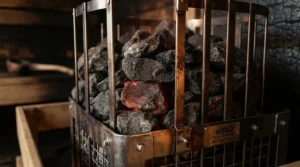
The standout feature is flexibility: this is a wall-mounted 6kW stove rated for cabins between roughly 5 and 8 cubic metres, sold on its own for anyone building a custom sauna room, converting an existing outbuilding, or replacing a failing heater in an older cabin rather than buying an entire new kit. It measures 500 x 340 x 510mm, holds around 25kg of stones, and runs on either single-phase 230V or three-phase 400V depending on your electrical setup.
Based on the spec comparison, the practical case for buying a heater separately rather than a bundled cabin kit is control — you can match the kW output precisely to your room’s cubic capacity instead of accepting whatever stove a manufacturer decided was “good enough” for their cabin size, which sometimes leaves buyers with an underpowered heater struggling to reach temperature on cold UK evenings. This is the sensible route for anyone with carpentry confidence who’s sourcing cabin panels separately, or for a bathroom-adjacent sauna conversion where a pre-fabricated cabin simply won’t fit the space.
Reviewers consistently flag that Harvia’s built-in control unit is straightforward to operate compared with separate external controllers, though the stove ships without a supply cable or stones, so budget for those as separate line items when planning the total cost.
Pros:
- ✅ Precisely sized to 5-8m³ rather than a generic fit
- ✅ Dual voltage compatibility (230V or 400V)
- ✅ Straightforward built-in control panel
Cons:
- ❌ Ships without supply cable or stones
- ❌ Requires a hardwired dedicated circuit by a qualified electrician
At around £450-£650, it’s a genuinely sound value traditional sauna component for anyone assembling a cabin themselves, though the installation labour cost should be factored in separately.
7. Harvia Olivine Diabase Sauna Stones 20kg — best genuine Finnish stones for authentic löyly
The standout feature is provenance: these are genuine olivine diabase stones, a dense subvolcanic rock mined specifically in western Finland and split-face cut so water vaporises efficiently across the broad fracture surface rather than beading off a smooth pebble. Sold in 20kg boxes in either a 5-10cm or 10-15cm size depending on your heater’s stone cavity, they’re the reference stone type most Finnish stove manufacturers design their heating elements around.
Here’s what most buyers overlook about sauna stone types: not all rock survives repeated thermal shock from cold water hitting hot stone. Ordinary garden or river stones can crack explosively under that stress because their mineral structure wasn’t formed to handle it, which is a genuine safety concern rather than sales pitch exaggeration. Olivine diabase’s density and thermal expansion characteristics are close enough to a heater’s metal elements that the stones expand and contract in step with the equipment, reducing the risk of premature element damage — a detail the spec sheet states plainly but that’s easy to skip past.
Aggregated sentiment around genuine Finnish sauna stones versus generic “lava rock” alternatives consistently favours the diabase for producing a softer, more enveloping steam on each ladle of water, rather than a harsh, thin burst that dissipates too quickly.
Pros:
- ✅ Genuine Finnish olivine diabase, sourced correctly
- ✅ Split-face cut improves steam vaporisation
- ✅ Thermal expansion matched to heater elements
Cons:
- ❌ Needs replacing roughly every 1-2 years
- ❌ Heavier to handle than smaller stone bags
Priced under £60 for a 20kg box in most cases, this is one of the cheapest genuine upgrades on this entire list relative to the difference it makes to actual löyly quality.
Setting Up Your Traditional Sauna: A Practical Home Guide
Getting a traditional sauna for home use from delivered flat-pack to first proper sweat session involves more than just bolting panels together. Start with the base: whether indoors or in the garden, the cabin needs a genuinely level, solid surface — a concrete slab, decking rated for the load, or compacted gravel — because even small unevenness stresses the panel joints over repeated heat cycles and can eventually cause gaps to open at the seams.
During the first 30 days, run the heater through a few “seasoning” sessions without anyone inside, gradually increasing to full temperature. This lets the timber acclimatise and burns off the faint resinous smell fresh wood produces, which is normal but off-putting if you weren’t expecting it on your first proper session. A common early mistake is loading the stones too densely — they should sit loosely enough for water and air to move between them, since overpacking chokes the löyly and can trap excess heat against the element.
For ongoing maintenance, wipe benches down after each use to prevent sweat and moisture building up in the grain, and give the cabin interior a light clean with a mild, sauna-appropriate cleaner every few weeks rather than anything heavily perfumed, which can leave residue that scorches unpleasantly at high temperatures. Inspect stones every few months for cracking, and plan to replace them entirely once a year or so with regular use — a habit that keeps both steam quality and heater longevity in good shape.
If you’re installing outdoors, it’s also worth a quick check of the planning rules for garden outbuildings, since sauna cabins fall under the same category as sheds and garden rooms and most stay within permitted development limits — but boundary distance and overall height can occasionally push a larger cabin over the threshold.

Real-World Scenarios: Who Should Buy Which Traditional Sauna
The young couple with a small garden. Two professionals in a terraced house with a modest patio, wanting a weekly recovery ritual after gym sessions. Budget around £1,500-£2,000, weekly use. The compact footprint and genuine Harvia stove of the amocane Outdoor Steam Sauna suits this well — enough capacity for two without eating the whole garden, and a heater they won’t need to second-guess.
The family of five with a large rear garden. Parents wanting a shared wind-down space the whole household can use together on weekends, with occasional guests. Budget around £4,000-£5,000, twice-weekly use. The 5-6 Person Traditional Sauna or the KeiCo Wellness 250 both suit different sides of this brief — the former maximises seating, the latter balances genuine 4-person comfort with a porch for shoes and towels.
The DIY renovator converting a garage corner. Someone with existing carpentry skills building a bespoke cabin into an unused indoor space, prioritising control over the finished result. Budget around £600-£1,200 for heater and stones alone, daily potential use. The Harvia Vega Lux 6kW Electric Sauna Heater paired with genuine Harvia Olivine Diabase Sauna Stones gives this buyer the components to match output precisely to their room’s cubic capacity, rather than accepting a pre-set combination.
Buyer’s Decision Framework: Finding Your Right Traditional Sauna
If space is your tightest constraint, choose a 2-person barrel cabin like the amocane Outdoor Steam Sauna, because narrower footprints fit awkward garden corners that square cabins can’t. If your household regularly exceeds three people wanting to sauna together, choose the KeiCo Wellness 250 or the 5-6 Person Traditional Sauna, because undersizing a family cabin just creates queuing and resentment on sauna night. If you already have a suitable indoor or outbuilding space and simply need heating, choose the Harvia Vega Lux 6kW Electric Sauna Heater on its own, because buying a full cabin kit you don’t need wastes money on panels you’ll discard. If long-term weatherproofing matters more than seating capacity, choose the AURGOD Outdoor Barrel Sauna, because the asphalt shingle roof and waterproofing genuinely outlast tarp-covered alternatives in UK weather. If you’re simply upgrading an existing tired cabin, start with the Harvia Olivine Diabase Sauna Stones, because stone quality is the cheapest single change that noticeably improves the actual steam experience.
How to Choose a Traditional Sauna for Home
- Measure your space realistically, including clearance. A cabin needs room around it for ventilation and door swing, not just its footprint on a spec sheet.
- Match heater kW output to cubic capacity, not room count. An underpowered stove in a large cabin will never reach a satisfying temperature on a cold evening.
- Check whether stones and accessories are included. Bundled kits often work out cheaper than buying a bare cabin and sourcing stones, bucket and ladle separately.
- Decide between wood-fired and electric heating early. Wood-fired suits a rustic, hands-on ritual but needs chimney clearance; electric suits convenience and consistent temperature control.
- Verify the timber type and treatment. Thermo-treated woods resist warping and damp smell far better than untreated softwood over a UK garden’s damp winters.
- Confirm your electrical supply can handle the load. Most home sauna heaters need a dedicated circuit installed by a qualified electrician, not a standard socket.
- Factor in delivery and assembly realistically. Large flat-pack cabins typically need two people and a free afternoon; budget the time as much as the money.
Traditional Sauna vs Infrared Sauna
The two categories solve the same broad problem — heat exposure for relaxation and recovery — through genuinely different mechanisms, and the distinction matters more than most retailers explain upfront. A traditional sauna heats the surrounding air, typically to 70-100°C, using an electric or wood-fired stove topped with stones; pouring water over those stones produces löyly, the humid steam burst that defines the experience. An infrared sauna instead uses panels that emit radiant heat directly absorbed by the body, running at a much lower ambient air temperature, usually 45-60°C, without any steam element at all.
In practice, this changes the experience considerably. Traditional saunas deliver an intense, all-encompassing heat that many long-term users describe as more socially communal — several people sharing one steamy room — while infrared sessions tend to run longer at lower intensity and suit people who find very high temperatures uncomfortable or who have specific medical guidance to avoid extreme heat. Traditional models also demand more from your electrical supply, since a proper stove drawing 4.5-9kW needs a dedicated circuit, whereas many infrared cabins can run from a standard socket.
For UK buyers specifically weighing this up, the honest verdict is that a traditional sauna for home use wins on authenticity and social sweat sessions, while infrared wins on lower running costs and simpler electrical requirements — neither is objectively “better,” they’re solving slightly different wellness goals.
Löyly and Steam Bursts: The Heart of the Traditional Sauna Experience
Löyly is the Finnish word for the burst of steam produced when water hits hot sauna stones, and it’s genuinely the defining feature separating a real traditional sauna from a simple hot box. The stones absorb and store heat continuously from the element beneath them; when water contacts that stored thermal energy, it flash-vaporises, releasing a wave of humid heat that raises perceived temperature sharply for a short period before gradually settling.
What most first-time buyers don’t realise is that löyly quality depends almost entirely on stone selection and stacking, not just heater wattage. Densely packed stones choke airflow and produce a weak, uneven steam; too loosely packed and heat storage capacity drops, meaning the burst fades too quickly. The research linking regular heat exposure to measurable cardiovascular benefits specifically studied traditional Finnish-style sauna bathing with this humid heat cycle, not dry-heat alternatives, which is worth knowing if health benefits are part of your motivation for buying.
Practically speaking, use small amounts of water at a time — roughly half a ladle per throw — rather than dousing the stones in one go, which can produce an uncomfortably sharp blast of steam and risks thermal shock cracking cheaper stone types over time.
Sauna Stone Types Explained: Choosing the Right Stones for Heat and Steam
Not all sauna stones perform equally, and the differences genuinely affect both your experience and your heater’s lifespan. Olivine diabase is the industry-standard choice worldwide, a dense, dark subvolcanic rock prized for its balance of heat retention, durability and cost. Peridotite sits a step above it in most comparisons, offering even greater density and structural resilience, though it’s rarer and commands a higher price. Vulcanite is a darker, similarly durable alternative favoured partly for its striking black finish alongside solid performance credentials.
The rule that actually matters for safety: never substitute ordinary garden, river or building-yard stones. These weren’t formed or selected for repeated extreme thermal cycling, and they can fracture violently when cold water hits them at high temperature, scattering sharp fragments inside an enclosed space. Genuine sauna stones are specifically quarried and split-face cut for this exact stress pattern.
Replacement timing matters too — even premium stones eventually crack and shrink from years of thermal cycling, reducing the gaps needed for proper airflow and water vaporisation. A simple visual check every few months, comparing stone size to a clenched fist, tells you when it’s time for a fresh 20kg box.

Ventilation Requirements for a Home Sauna
Proper ventilation is not optional in a traditional sauna, and it’s one of the most commonly overlooked requirements among first-time buyers. A correctly ventilated cabin needs both an intake vent, typically positioned low near the heater to draw in fresh air, and an outlet vent positioned higher and on the opposite wall, allowing stale, humid air to escape and creating a gentle circulation loop rather than a stagnant, oxygen-poor room.
Beyond comfort, ventilation also protects the timber itself — a cabin without adequate airflow traps moisture in the wood after every session, accelerating warping, mould growth and that musty smell that ruins an otherwise good sauna. Most manufacturers specify vent sizing relative to cabin volume in their installation instructions, and it’s worth following these precisely rather than guessing.
Electrical safety sits alongside ventilation as a genuine, non-negotiable requirement. UK building regulations specifically classify the area around a sauna heater as a special location requiring notifiable electrical work, meaning installation should go through a registered, competent electrician rather than a confident DIY attempt — not a box-ticking formality, but a genuine fire and shock risk given the combination of high heat, moisture and mains voltage in one small space.
Traditional Sauna Cabin for 4 People: Sizing Your Home Sauna Right
Choosing a traditional sauna cabin for 4 people specifically, rather than settling for a generically labelled “up to 4” cabin, comes down to bench depth and layout as much as headline capacity. Many budget cabins market a 4-person rating based on squeezing four adults onto benches designed with minimal shoulder room, which works for a brief photo but grows uncomfortable across a genuine 15-20 minute session.
Look specifically at bench depth (ideally 50-60cm to allow lying down or reclining, not just sitting upright), tiered seating if the cabin offers it (upper benches run hotter, useful for varying intensity within the group), and door clearance for four people entering and exiting without a bottleneck. The KeiCo Wellness 250 earns its place on this list specifically because its barrel length and porch area were designed around genuine 4-person comfort rather than a marketing capacity claim retrofitted onto a smaller structure.
For households genuinely committed to regular group sessions, it’s also worth sizing the heater slightly above the cabin manufacturer’s minimum recommendation — four bodies in an enclosed space add meaningful humidity and heat load that a bare-minimum stove can struggle to keep pace with on a busy session.
Value Traditional Sauna: Getting the Best Long-Term ROI
A genuinely value traditional sauna isn’t simply the cheapest upfront price — it’s the lowest total cost across several years of ownership, factoring in running costs, replacement parts and durability. Electric heaters typically cost somewhere in the range of 60p-£1 per 30-minute session in electricity, depending on kW rating and local tariff, making even daily use relatively affordable compared with a gym or spa membership over a year.
The recurring costs worth budgeting for are stone replacement (roughly annually, under £60 a time for a genuine 20kg box) and periodic maintenance products for the timber. Where buyers most commonly overspend is spending everything on the cabin itself and skimping on stone quality or a dedicated electrical installation — false economies that show up as poor löyly quality or, worse, an unsafe wiring job within the first year.
Cost-per-use genuinely favours a well-built traditional sauna for home use over years of ownership; a £2,000 cabin used twice weekly for five years works out to roughly £4 per session before running costs, comfortably undercutting most spa day-pass pricing in the UK.
Common Mistakes When Buying a Home Sauna
The most frequent error is undersizing the heater relative to the cabin, chasing a lower price on the stove without checking the kW-to-cubic-metre ratio the manufacturer recommends — the result is a cabin that never quite reaches a satisfying temperature. A close second is skipping proper vapour barrier installation behind the panels on DIY builds, which lets moisture seep into wall cavities and cause hidden rot over a few seasons. Buyers also commonly underestimate delivery logistics for large flat-pack cabins, discovering too late that a narrow side gate or steep garden slope makes getting panels to the installation site genuinely difficult. Finally, treating the electrical connection as a DIY job to save on electrician fees is a persistent and genuinely risky mistake given the combination of moisture, heat and mains voltage involved.
Features That Actually Matter (And Those That Don’t)
Genuine stone quality, adequate ventilation sizing, and correctly matched heater output are the features that actually shape your day-to-day experience — get these right and almost any reasonably built cabin will deliver a satisfying session. Digital Wi-Fi control panels, coloured LED lighting and Bluetooth speakers, by contrast, are pleasant extras that photograph well in listings but contribute nothing to löyly quality or long-term durability; they’re worth having if the price difference is marginal, not worth chasing as a primary decision factor. Glass door size sits somewhere in between — genuinely pleasant for natural light and monitoring the space, but not something to prioritise over insulation thickness or heater sizing if budget is tight.
Frequently Asked Questions
❓ How hot does a traditional sauna for home get?
❓ Do I need planning permission for a home sauna in the UK?
❓ What's the difference between wet and dry sauna heat?
❓ How much electricity does a home sauna use?
❓ Can I install a traditional sauna heater myself?
Conclusion
Choosing a traditional sauna for home use really comes down to matching genuine specifications to how your household will actually use it — capacity, heater output, timber treatment and stone quality matter far more than glossy extras like coloured lighting. Across the seven products covered here, the Harvia Sauna Cabin and amocane Outdoor Steam Sauna stand out for buyers who want a trusted heater brand without premium pricing, while the KeiCo Wellness 250 solves the specific problem of finding a cabin genuinely built for four people rather than a squeezed compromise.
For anyone converting an existing space or upgrading a tired cabin, the Harvia Vega Lux 6kW Electric Sauna Heater and genuine Harvia Olivine Diabase Sauna Stones offer a route to noticeably better löyly without a full cabin replacement. Whichever direction you go, prioritise correct ventilation, a properly rated electrical installation, and genuine sauna stones over flashy add-ons — get those fundamentals right and the rest of the experience largely takes care of itself.
✨ Ready to bring the ritual home?
Browse the picks above, check current pricing and availability, and start planning your first löyly session this season! 🔥🪵
Recommended for You
- Infrared Panels for DIY Sauna: 7 Best Picks for UK Builds (2026)
- Carbon Fibre Infrared Sauna Panels: 7 Best UK Picks (2026)
- Binfrared Sauna Panels: 7 Top Picks & Costly Mistakes (2026)
Disclaimer: This article contains affiliate links. As an Amazon Associate, I earn from qualifying purchases. If you purchase products through these links, we may earn a small commission at no additional cost to you.
✨ Found this helpful? Share it with your friends! 💬🤗
