
In This Article
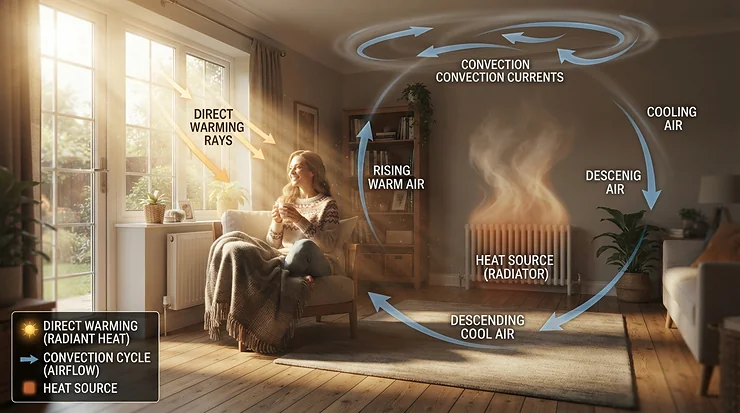
The traditional sauna vs infrared sauna question comes down to how the heat reaches you. A traditional cabin heats the air to roughly 70-100°C with a stove and stones, then bathes you in that hot air and steam. An infrared cabin uses radiant panels to warm your skin directly at a gentler 40-65°C.

Simple on paper. In practice, that one difference ripples through everything: how long you wait before you can step in, what lands on your electricity bill, whether you need an electrician, and even whether a Finn would call your purchase a sauna at all. In fact, Finnish sauna organisations do not count infrared as a sauna, which tells you how seriously the tradition takes its steam.
That doesn’t make infrared “fake”. It makes it a different tool. Think of a wood-fired pizza oven against a very good air fryer: both get dinner on the table, but only one gives you the ritual.
This guide is built for UK buyers weighing both routes. I’ve compared seven real products across budget, mid-range and premium tiers, drawing on manufacturer specifications and published reviews rather than any claim of hands-on testing. Along the way you’ll find a traditional sauna heater review, a plain-English take on dry heat vs radiant heat, a realistic preheat time comparison and a breakdown of running cost differences at current UK electricity rates. Short on time? Skim the table below. Want to make this decision once and properly? Read on.
Quick Comparison: Traditional Sauna vs Infrared Sauna at a Glance
| Factor | Traditional sauna | Infrared sauna |
|---|---|---|
| Air temperature | Around 70-100°C | Around 40-65°C |
| How you’re heated | Hot air, steam (löyly) and radiant heat from stones | Radiant panels warm your skin directly |
| Typical preheat | 30-60 minutes | 10-15 minutes |
| Power draw | Roughly 3.5-9 kW | Roughly 0.5-2 kW |
| Installation | Usually hard-wired by an electrician | Often a standard 13A plug |
| Evidence base | Larger (Finnish cohort studies) | Thinner |
| Example products | Harvia Cilindro PC70, Harvia Vega Compact BC35, Harvia M3, The Sauna Pod | MyoSauna Infrared, VITAL+ SaunaPod Infrared, SptShapr Sauna Blanket |
| Best for | Steam lovers, ritual seekers, long-term installs | Quick sessions, flats, lower running costs |
Read across the rows and a pattern emerges. Traditional wins on ritual, steam and research depth, while infrared wins on speed, plug-in simplicity and cost per session. If you love the idea of ladling water onto hot stones, the Harvia Cilindro PC70 and Harvia M3 belong on your shortlist, but if you want warmth on a weeknight without a long wait, MyoSauna Infrared and VITAL+ SaunaPod Infrared make more sense, and The Sauna Pod sits happily between the camps with dry heat at pop-up pricing.
💬 Just one click — help others make better buying decisions too!😊
Top 7 Sauna Picks: Expert Analysis
1. Harvia Cilindro PC70 — soft, forgiving steam from a stone pillar
The star here is stone mass. This pillar heater holds a huge stack of stones (retailer listings quote roughly 80-90 kg), and its grate-style shell lets you shape the steam: water thrown at the side gives a soft wave, while water on top of the stack snaps out something sharper.
Key specs: 6.8 kW output, sized by Harvia for rooms of about 6-10 m³, and roughly 930 mm tall. Controls range from simple mechanical knobs to the Xenio digital panel, plus a WiFi version with a door sensor for safe remote starts. In plain terms, a big stone bed works like a heat battery: slower to warm, but steadier once hot and far less sulky when someone opens the door.
Based on the spec comparison, this is a heater for people building or converting a properly insulated room who care more about the quality of the löyly than about speed. It needs a hard-wired supply, so budget for an electrician, plus several boxes of stones that aren’t included.
Independent user reviews for this specific model were thin in my research, so this take rests on manufacturer data and how UK retailers describe it. The recurring theme is smooth, gentle steam. Harvia also lists one black variant as discontinued, so confirm which version is actually in stock.
Pros:
- ✅ Large stone mass gives soft, steady steam
- ✅ Can be embedded into a bench to save floor space
- ✅ Choice of mechanical, digital or WiFi control
Cons:
- ❌ Stones are sold separately, adding to the cost
- ❌ Needs a hard-wired electrician install
Pricing sits at the premium end of the traditional heaters here (check current price), and it’s good value only if your room is genuinely sized for it.

2. Harvia Vega Compact BC35 — 3.5 kW wall-mount for tiny rooms
Its standout trick is how low it mounts. Fixed to the wall with a single screw, it can sit close to the floor, which matters more than it sounds: in small saunas the top bench scorches while your toes stay cold.
Key specs: 3.5 kW, wall-mounted stainless steel, built-in timer and thermostat (retailers cite up to an 8-hour timer), and one box of 5-10 cm stones. It suits small rooms of roughly 3-5 m³, and reviewers report 30-45 minutes to reach bathing temperature in a well-built space. That range is the price of a small stone bed: quick enough, but nowhere near the buffer of a pillar heater.
Here’s what to weigh: this is the heater for a cupboard-sized cabin, a garage corner, or an infrared cabin you’d like to pair with rock steam. Steam is crisp and immediate but lighter than a big-stone alternative. One US-based review also notes it must be hard-wired on a dedicated circuit, so plan on an electrician.
Reviewers consistently describe it as simple, safe and quietly reliable, with the main trade-off being room size. Push it into a larger or poorly insulated space and it will struggle.
Pros:
- ✅ Mounts low so lower benches get real heat
- ✅ Built-in controls, no separate control box
- ✅ Suits compact rooms and tight clearances
Cons:
- ❌ Small stone bed gives lighter steam
- ❌ Still needs a hard-wired electrician install
Pricing sits at the budget end of the traditional heaters here (check current price), and for a genuinely small room the value is hard to fault.
3. Harvia M3 — wood-fired classic for off-grid gardens
Real fire is the headline. A glass door lets the flames flicker through the session, and you need no electrical supply at all, which frees garden cabins and barrel saunas from the trenching and circuit work an electric heater demands.
Key specs: 16.5 kW output, suited to rooms of roughly 6-13 m³, graphite-black body with a stainless airflow spoiler, and an optional pipe-style water heater. Stones aren’t included (the stove needs at least around 30 kg), and you’ll need a flue kit and correct clearances. That 16.5 kW figure sounds enormous next to a 6.8 kW electric heater, but it’s fuel power, not a bill.
Frankly, this is for outbuildings, not flats. If you own the land and enjoy tending a fire, it’s the most atmospheric option in this guide. The rituals of logs and ash come as a package.
Buyer feedback is positive: reviewers report a steady draught, no smoke smell when reloading, and stones that hold heat well. One notes the firebox is small, so logs need cutting short (around 33 cm), and another says the stove heats quickly and spreads steam nicely.
Pros:
- ✅ No electrical supply or circuit needed
- ✅ Glass door adds genuine firelight atmosphere
- ✅ Handles small-to-medium rooms up to 13 m³
Cons:
- ❌ Small firebox demands short logs
- ❌ Flue, clearances and log storage add complexity
Stove-only pricing has historically sat in the low hundreds of pounds, with flue kit extra (check current price), which makes it the best-value route to authentic heat.
4. The Sauna Pod — 85°C hot air for around £500
This one earns its place by being different. Where most sub-£500 portables are infrared mats or steam tents, The Sauna Pod is a one-person cotton cabin with a hot-air heater.
Key specs: a 1,500W heater, an interior that reaches about 85°C, and a manufacturer claim of maximum temperature in roughly 15 minutes. That 85°C sits at the lower end of the traditional Finnish range, which is where most of the published sauna research happened. The published specs describe hot air rather than a stone stove, so don’t expect to ladle water.
Here’s the honest analysis: it’s the cheapest route to a genuinely hot dry sauna, best for a renter, a garage or a curious first-timer. Published UK commentary suggests a cotton cabin may last around three to five years, far short of a fitted wooden room, and the reviewer behind that assessment is clear it doesn’t hands-on test every product.
Independent sentiment leans positive, with one UK roundup rating it strong value. One brand-hosted buyer review also shows why assembly matters: a zip not fully closed stopped the cabin reaching full heat.
Pros:
- ✅ Genuine 85°C dry heat at pop-up pricing
- ✅ Quick setup and small floor footprint
- ✅ Heats in roughly 15 minutes (manufacturer claim)
Cons:
- ❌ Cotton cabin likely lasts only 3-5 years
- ❌ One-person capacity
Pricing sits around £500 (roughly £450-£550 at the time of research), and as an entry ticket to dry heat the value is excellent.
5. MyoSauna Infrared — plug-in 1,600W cabin with red light
Its standout feature is convenience. This is a proper one-person cabin that runs from a standard 13A socket, so there’s no rewiring, no electrician and no hard-wired anything.
Key specs: a 1,600W carbon-and-ceramic heating system, a 40-65°C range, and about ten minutes to reach 65°C according to a UK reviewer. It adds built-in red light therapy, Bluetooth audio, LED lighting and an ozone cleaner. That 1,600W draw is roughly 7 amps, comfortably inside a UK plug’s limit, and the brand’s own 40p-per-hour running figure matches simple arithmetic at current rates.
On paper this means an effortless daily habit, ideal for someone with a spare corner who’d rather warm up in minutes than manage a stove. However, the 65°C ceiling is a different sensation from a 90°C cabin, and the published evidence for infrared is thinner than for traditional dry heat.
Most testimonials come from the brand itself, so treat them cautiously. Independent commentary rates it among the strongest UK options for people who’ve already chosen infrared, while noting the short one-year warranty.
Pros:
- ✅ Plug-and-play on a standard 13A socket
- ✅ Reaches working temperature in about ten minutes
- ✅ 60-day return window reduces buying risk
Cons:
- ❌ One-year warranty is on the short side
- ❌ Thinner research base than traditional dry heat
Pricing sits in the £1,200-£1,400 range at the time of research, and the value is fair for a plug-in cabin with red light included.
6. VITAL+ SaunaPod Infrared — portable infrared pod for flats
Its hook is the footprint. A pentagon-shaped fabric pod, it fits a corner in a small flat and folds away when you’re done, with dispatch from the UK.
Key specs: plug-and-play use, 660nm red light and four-colour chromotherapy lighting. A US retailer guide lists a pentagon footprint of about 91 × 91 cm and roughly 190 cm height, with a 10-15 minute setup and a machine-washable floor mat. In practice that means a corner about a metre square, which is friendlier to a bedroom than any wooden cabin.
Based on independent testing, the compact pod heats up quickly, but its maximum temperature plateaued sooner than expected. Heat enthusiasts may find it gentle, and that suits someone who wants warmth and calm rather than a scorching session.
Sentiment splits neatly. Brand-hosted reviews praise easy assembly and comfortable breathing, while the independent UK tester was more measured about peak heat. That gap is exactly why I’d read recent verified reviews before buying.
Pros:
- ✅ Sets up in around 10-15 minutes
- ✅ Compact pentagon fits into a room corner
- ✅ Includes red light and colour lighting
Cons:
- ❌ Independent test saw temperature plateau early
- ❌ Fabric pod is less robust than a wooden cabin
Pricing sits in the portable-pod tier, well below fixed cabins (check current price), and it’s sensible value if space is your main constraint.
7. SptShapr Sauna Blanket — cheapest way into radiant heat
The standout is what it doesn’t need: space. It rolls up and slides under a bed, which suits anyone who’d skip a sauna rather than surrender floor area.
Key specs from its Amazon UK listing: a 45-80°C range (113-176°F), a 30-60 minute timer and sleeves for the arms. Those temperatures are surface heat around your body, not cabin air, so it feels nothing like a wooden room. It’s lie-down only, which makes it a wind-down and recovery tool rather than a seated experience.
Here’s what to weigh: it’s the lowest-commitment way to test whether radiant heat suits you before spending four figures. Ignore any “detox” or weight-loss claims on listings; sweat loss is mostly water you’ll replace.
I couldn’t verify individual review data here, so I won’t quote ratings. It appeared among Amazon UK’s best-selling saunas at the time of research, which signals popularity, not quality. Check recent verified reviews for heat consistency and durability before buying.
Pros:
- ✅ Cheapest entry point to radiant heat
- ✅ Stores flat with no cabin needed
- ✅ Simple timer and temperature control
Cons:
- ❌ Lying down only, no cabin experience
- ❌ Review quality unverified here; check before buying
Pricing is the lowest in this guide (check current price), and for a taster session the value is hard to beat.
Top 7 Compared at a Glance
| Product | Type | Power | Typical preheat | Price band | Best for |
|---|---|---|---|---|---|
| Harvia Cilindro PC70 | Electric stone heater | 6.8 kW | 30-60 min | Premium (check current price) | Serious löyly in a fitted room |
| Harvia Vega Compact BC35 | Electric wall heater | 3.5 kW | 30-45 min | Budget end (check current price) | Tiny rooms and corners |
| Harvia M3 | Wood-burning stove | 16.5 kW (fuel) | Depends on fire | Low hundreds, stove only | Off-grid garden cabins |
| The Sauna Pod | Hot-air pop-up | 1,500W | ~15 min (claimed) | £450-£550 | Cheap dry heat for renters |
| MyoSauna Infrared | Infrared cabin | 1,600W | ~10 min | £1,200-£1,400 | Plug-in daily sessions |
| VITAL+ SaunaPod Infrared | Infrared pod | Check listing | Quick (independent test) | Portable tier (check current price) | Flats and small corners |
| SptShapr Sauna Blanket | Infrared blanket | Check listing | Minutes | Lowest here (check current price) | Testing radiant heat cheaply |
With electricity at roughly 26p per kWh under the Ofgem price cap from 1 October, the Harvia Cilindro PC70 costs several times more per session than MyoSauna Infrared, but only the traditional options deliver true löyly. Space-starved buyers should compare The Sauna Pod with VITAL+ SaunaPod Infrared, while budget shoppers can begin with the SptShapr Sauna Blanket.
Your First 30 Days: Setup, Maintenance and Common Slips
The first month decides whether a sauna becomes a habit or a very expensive coat rack. Start with the boring bits, because they matter.
Traditional heaters. Follow the manual for stacking stones: loose and airy, never packed tight, since the stones need airflow around the elements. Wash off dust first. Run the first heat-ups with the door open a touch and the room ventilated, as new heaters can give off a faint smell initially. If you own the Harvia Vega Compact BC35, mount it low; if you own the Harvia M3, check flue clearances before the first fire and keep the ash-box vent slightly open, as one buyer found necessary.
Infrared and pop-ups. Lay a towel on the seat and wipe surfaces after use. With The Sauna Pod, close every zip fully, because one owner couldn’t reach full temperature until fixed. With MyoSauna Infrared or VITAL+ SaunaPod Infrared, place them on a hard, level floor away from curtains.
A gentle ramp-up. Week one: two short sessions. Weeks two to four: three sessions, extending gradually. Drink water before and after, and stop if you feel dizzy.
Quick fixes. Weak heat at your feet? Lower the heater or add a bench footrest. Steam too sharp? Pour water onto the side of the stones. Session too cool? Check insulation and door seals before blaming the kit.
Real-World Scenarios: Which Sauna Fits Which Life
Numbers mean little without a life attached, so here are three realistic profiles.
The renter in a one-bed flat. Budget: around £500, three sessions a week, no chance of rewiring. Roughly speaking, VITAL+ SaunaPod Infrared suits someone who wants gentle warmth in a corner, while The Sauna Pod suits someone who wants genuine heat and can tolerate a few years’ lifespan. At about 30p a session, either costs around £45-£50 a year to run.
The family with an insulated garden cabin. Budget: £3,500-£5,000 all in, four sessions weekly, and a taste for ritual. The Harvia Cilindro PC70 fits, with an electrician’s visit already priced in. Expect roughly £1.70 per session, or about £265 a year at three sessions a week, and a room that feels like a proper sauna.
The off-grid allotment owner. No power, plenty of logs. The Harvia M3 wins on autonomy, and running costs become a question of firewood rather than kilowatt-hours.
The recovery-minded home gym user. A spare corner, a 13A socket and twenty minutes before work. MyoSauna Infrared heats in about ten minutes and costs around 30-35p a session. Meanwhile, the SptShapr Sauna Blanket works for anyone who only wants a lie-down after training.
How to Choose Between a Traditional Sauna vs Infrared Sauna
Follow these steps in order and the decision usually makes itself:
- Decide what you want from the ritual. If löyly (steam on hot stones) matters, you’re shopping traditional; if quiet warmth is enough, infrared works.
- Measure the room. Heaters are rated by volume: the Harvia Vega Compact BC35 suits roughly 3-5 m³, the Harvia Cilindro PC70 about 6-10 m³, and the Harvia M3 6-13 m³.
- Check your electrics. A standard UK plug tops out near 3 kW, which is why 1,600W cabins plug in while big heaters need hard-wiring.
- Price the whole project. Add an electrician (around £500-£900 in published UK guidance), stones and delivery to the sticker price.
- Match preheat to your life. If you’ll only have twenty minutes free, a 45-minute warm-up is a dealbreaker.
- Check insulation and ventilation. A poorly sealed room wastes every kilowatt, whichever type you buy.
- Confirm compliance and support. Look for CE or UKCA marking, a UK warranty and a clear returns policy.
Dry Heat vs Radiant Heat: How Each Feels
Understanding dry heat vs radiant heat explains why two 40-minute sessions can feel like different activities.
In a traditional cabin, hot air surrounds you, and the stones and walls radiate warmth as well. Pour water on the stones and humidity spikes, which makes the air feel hotter than the thermometer says. That’s löyly, and it’s why “dry heat” is slightly misleading: the sauna is dry until you decide otherwise.
Infrared works differently. Far-infrared panels emit radiation that your skin absorbs directly, so the surrounding air stays at 40-65°C while your body warms up. UK reviewers note that sweating and heart-rate response overlap with traditional use, even though the mechanism differs. Panel layout matters here: panels behind and beside you, ideally with some low heat for calves, avoid the “cold front, hot back” problem.
| Benefit | Traditional | Infrared |
|---|---|---|
| Sensation | Enveloping hot air and steam bursts | Gentle, direct warmth |
| Heat tolerance | Demands comfort with 80°C+ | Easier for heat-sensitive people |
| Humidity | Adjustable with water on stones | Essentially none |
| Session feel | Shorter rounds with cool-downs | Longer, calmer sessions |
| Best for | Harvia Cilindro PC70, Harvia M3 fans | MyoSauna Infrared, VITAL+ SaunaPod Infrared fans |
Looking at the table, traditional wins for sensory drama, while infrared wins for tolerability. If you dislike high heat, MyoSauna Infrared is the kinder starting point, and if you crave intensity, The Sauna Pod offers a cheaper taste of it.
Traditional Sauna Heater Review: What Separates a Good Stove from a Cheap One
Most traditional sauna heater review pages rank products by power alone. That misses the point. Four things matter more.
Stone mass. More stones mean softer steam and steadier temperature. The Harvia Cilindro PC70 carries roughly 80-90 kg, while the Harvia Vega Compact BC35 needs just one box, which explains the difference in steam character.
Power against room volume. Undersize the heater and it runs flat out forever; oversize it and temperatures spike. Use the manufacturer’s volume range, not a guess.
Controls. Mechanical knobs are simple and robust, but digital and WiFi panels let you preheat remotely, particularly useful when heat-up takes 30-60 minutes. A door sensor makes remote starts safe.
Fuel and installation. Electric heaters need hard-wiring, while the Harvia M3 needs a flue but no supply.
Here’s the practical read: for small rooms, the Harvia Vega Compact BC35 is hard to beat; for luxury steam, the Harvia Cilindro PC70; for the garden, the Harvia M3. Whichever you pick, remember stones are usually extra.

Preheat Time Comparison: The Minutes You’ll Actually Wait
A fair preheat time comparison starts with the trend: traditional heaters take 30-60 minutes, infrared cabins take 10-15.
For electric traditional, the Harvia Vega Compact BC35 takes around 30-45 minutes in a well-built small room, and larger rooms with bigger heaters can take closer to an hour. The Harvia M3 depends on how quickly you get a fire going, plus the ritual of tending it. In the infrared camp, MyoSauna Infrared reaches 65°C in about ten minutes, The Sauna Pod claims roughly 15 minutes to reach 85°C, and VITAL+ SaunaPod Infrared heats quickly though its peak temperature plateaued early in independent testing.
Does this actually matter? Do the sums. An extra 30 minutes of preheat across three sessions a week is 78 hours a year of waiting, more than three full days. If your evenings are unpredictable, that’s a serious argument for infrared. If your sauna is a Sunday-afternoon ritual, the wait is part of the pleasure.
Two tricks help either way. Use a timer or WiFi start so a traditional heater is ready when you walk in, and keep the door shut while it warms.
Running Cost Differences: What a Session Really Costs
The running cost differences between the two types are large, and they’re mostly about power draw. Ofgem’s price cap puts the average electricity unit rate at about 26.32p per kWh for the 1 October to 31 December 2026 period, and VAT on electricity is removed until 31 March 2027.
The figures below are my own arithmetic at 26p per kWh, assuming three sessions a week and a session that includes typical preheat. Real bills vary with insulation and thermostat cycling.
| Product | Power | Approx. kWh per session | Cost per session | Cost per year (3 a week) |
|---|---|---|---|---|
| Harvia Cilindro PC70 | 6.8 kW | ~6.5 | ~£1.70 | ~£265 |
| Harvia Vega Compact BC35 | 3.5 kW | ~3 | ~80p | ~£125 |
| The Sauna Pod | 1,500W | ~1.1 | ~30p | ~£45 |
| MyoSauna Infrared | 1,600W | ~1.2 | ~32p | ~£50 |
| SptShapr Sauna Blanket | ~550W (assumed) | ~0.3 | ~8p | ~£12 |
At three sessions a week, the Harvia Cilindro PC70 costs about £220 more a year than MyoSauna Infrared. That lines up with published UK examples putting a 6 kW heater near £1.56 a session. The Harvia M3 sits outside this table because its cost is logs, not units.
The catch: running cost isn’t the whole cost. An electrician for a traditional heater can add several hundred pounds upfront, and the gap in yearly bills takes time to matter. Still, if daily use is the plan, infrared’s savings compound quickly.
Safety, Regulations and What the Research Actually Says
Start with the practical rules. Look for CE or UKCA marking on heaters and cabins, use a Part P-registered electrician for any hard-wired install, and confirm a portable cabin’s wattage against your socket. Consult your GP before using a sauna if you’re pregnant, have a heart condition or take medication that affects blood pressure, and never sauna after drinking alcohol.
Now the evidence. The big headline comes from Finland: the Kuopio study on sauna bathing and mortality followed 2,315 middle-aged men for around 21 years. It linked four to seven sessions a week with markedly lower risk of sudden cardiac death than one session a week.
Read that carefully. It’s observational, it involved men only, and it was based on traditional high-heat saunas. Even the journal’s editor noted the mechanism isn’t known. UK commentary also notes the research base for infrared is thinner. So nothing here proves a sauna will protect your heart, and none of it is medical advice. What it does suggest is that regular heat exposure may be a healthy habit, which is an argument for whichever type you’ll genuinely use most often.
FAQ
❓ Do I need an electrician to fit a traditional sauna heater in the UK?
❓ Can an infrared sauna run from a normal 13A socket?
❓ How much should I budget for a home sauna in the UK?
❓ Is a sauna blanket a real substitute for an infrared cabin?
❓ Are cotton pop-up saunas worth buying?
Conclusion
So which side wins the traditional sauna vs infrared sauna contest? Neither, because you’re really choosing between two lifestyles.
Choose traditional if steam, ritual and the deeper research base matter to you and you have a suitable room. The Harvia Cilindro PC70 delivers the softest löyly here, the Harvia Vega Compact BC35 is the smart pick for small spaces, and the Harvia M3 brings real fire to gardens without a power supply. The Sauna Pod gives you hot dry heat for around £500, with a shorter lifespan as the trade-off.
Choose infrared if speed, simplicity and lower bills matter more. MyoSauna Infrared is the plug-in cabin option, VITAL+ SaunaPod Infrared fits a flat corner, and the SptShapr Sauna Blanket is the low-risk way to test the waters.
Whatever you pick, the best sauna is the one you’ll actually use. Run the numbers on preheat, running costs and installation, be honest about your space, and buy for the life you have.
Recommended for You
- Traditional Saunas Under £2000: 7 Best UK Picks (2026)
- Traditional Sauna for Home: 7 Best Picks for UK Gardens (2026)
- Infrared Panels for DIY Sauna: 7 Best Picks for UK Builds (2026)
Disclaimer: This article contains affiliate links. As an Amazon Associate, I earn from qualifying purchases. If you purchase products through these links, we may earn a small commission at no additional cost to you.
✨ Found this helpful? Share it with your friends! 💬🤗
